Huawei Mate 40 Pro vs Xiaomi Mi 8
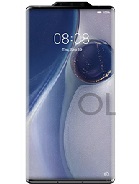
| Key Specs | |
|---|---|
| Display | 6.6 |
| Battery | 4500 mAh |
| Camera | 108 MP + 40 MP + 8 MP + TOF 3D |
| Storage | 256 GB 8 GB RAM |
Versions: LIO-L09, LIO-L29 (Global); LIO-AL00, LIO-TL00 (China)
| Network | |
|---|---|
| Technology | GSM / HSPA / LTE |
| 2G bands | GSM 850 / 900 / 1800 / 1900 - SIM 1 & SIM 2 (dual-SIM model only) |
| 3G bands | HSDPA 800 / 850 / 900 / 1700(AWS) / 1900 / 2100 |
| 4G bands | 1, 2, 3, 4, 5, 6, 7, 8, 9, 12, 17, 18, 19, 20, 26, 28, 32, 34, 38, 39, 40, 41 - Global |
| 5G bands | 1, 2, 3, 4, 5, 6, 7, 8, 9, 12, 17, 18, 19, 20, 26, 34, 38, 39, 40, 41 - China 5G band 1(2100), 3(1800), 41(2500), 77(3700), 78(3500), 79(4700) |
| Speed | HSPA 42.2/5.76 Mbps, LTE-A |
| Launch | |
|---|---|
| Announced | 2020, December 25 |
| Status | Coming Soon |
| Body | |
|---|---|
| Dimensions | - |
| Weight | - |
| Build | Glass front (Gorilla Glass 6), glass back (Gorilla Glass 6), aluminum frame |
| SIM | Single SIM (Nano-SIM) or Hybrid Dual SIM (Nano-SIM, dual stand-by) |
| IP68 dust/water resistant (up to 2m for 30 mins) | |
| Display for Huawei Mate 40 Pro | |
|---|---|
| Type | OLED capacitive touchscreen, 16M colors |
| Size | 6.6 inches, 108.7 cm2 (~94.1% screen-to-body ratio) |
| Resolution | 1080 x 2400 pixels, 18.5:9 ratio (~399 ppi density) |
| Protection | Corning Gorilla Glass 6 |
| HDR10 | |
| Platform | |
|---|---|
| OS | Android 10, EMUI 10 |
| Chipset | Kirin 1020 (7 nm) |
| CPU | Octa-core (2x2.86 GHz Cortex-A76 & 2x2.09 GHz Cortex-A76 & 4x1.86 GHz Cortex-A55) |
| GPU | Mali-G76 MP16 |
| Memory | |
|---|---|
| Card slot | NM (Nano Memory), up to 256GB (uses shared SIM slot) |
| Internal | 256GB 8GB RAM |
| UFS 3.0 | |
| Main Camera | |
|---|---|
| Quad | 108 MP, f/1.6, 27mm (wide), 1/1.7", PDAF, OIS 8 MP, f/2.4, 80mm (telephoto), 1/4.0", PDAF, OIS, 3x optical zoom 40 MP, f/1.8, 18mm (ultrawide), 1/1.54", PDAF TOF 3D, (depth) |
| Features | Leica optics, dual-LED dual-tone flash, panorama, HDR |
| Video | 4K@30/60fps, 1080p@30/60/120fps, 1080p@960fps, 720p@7680fps, gyro-EIS |
| Selfie camera | |
|---|---|
| Dual | 32 MP, f/2.0, 26mm (wide), 1/2.8", 0.8痠 TOF 3D, (depth/biometrics sensor) |
| Features | HDR, panorama |
| Video | 1080p@30fps |
| Sound | |
|---|---|
| Loudspeaker | Yes |
| 3.5mm jack | No |
| 32-bit/384kHz audio | |
| Comms | |
|---|---|
| WLAN | Wi-Fi 802.11 a/b/g/n/ac, dual-band, DLNA, Wi-Fi Direct, hotspot |
| Bluetooth | 5.1, A2DP, aptX HD, LE |
| GPS | Yes, with dual-band A-GPS, GLONASS, BDS, GALILEO, QZSS |
| NFC | Yes |
| Infrared port | Yes |
| Radio | No |
| USB | 3.1, Type-C 1.0 reversible connector, USB On-The-Go |
| Features | |
|---|---|
| Sensors | Face ID, fingerprint (under display, optical), accelerometer, gyro, proximity, barometer, compass |
| Battery | |
|---|---|
| Non-removable Li-Po 4500 mAh battery | |
| Charging | Fast charging 40W Fast wireless charging 27W Reverse wireless charging |

| Key Specs | |
|---|---|
| Display | 6.2 |
| Battery | 3300 mAh |
| Camera | 20 MP + 16 MP |
| Storage | 128 GB 6 GB RAM |
| Network | |
|---|---|
| Technology | GSM / CDMA / HSPA / LTE |
| 2G bands | GSM 850 / 900 / 1800 / 1900 - SIM 1 & SIM 2 |
| CDMA 800 & TD-SCDMA | |
| 3G bands | HSDPA 850 / 900 / 1700(AWS) / 1900 / 2100 |
| 4G bands | LTE band 1(2100), 2(1900), 3(1800), 4(1700/2100), 5(850), 7(2600), 8(900), 12(700), 17(700), 20(800), 34(2000), 38(2600), 39(1900), 40(2300), 41(2500) |
| Speed | HSPA 42.2/5.76 Mbps, LTE-A (4CA) Cat16 1024/150 Mbps |
| GPRS | Yes |
| EDGE | Yes |
| Launch | |
|---|---|
| Announced | 2018, May |
| Status | Available. Released 2018, June |
| Body | |
|---|---|
| Dimensions | 154.9 x 74.8 x 7.6 mm (6.10 x 2.94 x 0.30 in) |
| Weight | 175 g (6.17 oz) |
| Build | Front/back glass (Gorilla Glass 5), aluminum frame (7000 series) |
| SIM | Dual SIM (Nano-SIM, dual stand-by) |
| Display for Xiaomi Mi 8 | |
|---|---|
| Type | Super AMOLED capacitive touchscreen, 16M colors |
| Size | 6.21 inches, 97.1 cm2 (~83.8% screen-to-body ratio) |
| Resolution | 1080 x 2248 pixels (~402 ppi density) |
| Multitouch | Yes |
| Protection | Corning Gorilla Glass 5 |
| - HDR10 display - DCI-P3 - MIUI 9.5 | |
| Platform | |
|---|---|
| OS | Android 8.1 (Oreo) |
| Chipset | Qualcomm SDM845 Snapdragon 845 |
| CPU | Octa-core (4x2.8 GHz Kryo 385 Gold & 4x1.8 GHz Kryo 385 Silver) |
| GPU | Adreno 630 |
| Memory | |
|---|---|
| Card slot | No |
| Internal | 64/128/256 GB, 6 GB RAM or 128 GB, 8 GB RAM |
| Main Camera | |
|---|---|
| Dual | 12 MP, f/1.8, 1/2.55", 1.4µm, 4-axis OIS, dual pixel PDAF 12 MP, f/2.4, 56mm, 1/3.4", 1.0µm, AF, 2x optical zoom |
| Features | Dual-LED flash, HDR, panorama |
| Video | 2160p@30fps, 1080p@30/120/240fps |
| Selfie camera | |
|---|---|
| Single | 20 MP, f/2.0, 0.9µm |
| Video | 1080p@30fps |
| Sound | |
|---|---|
| Alert types | Vibration; MP3, WAV ringtones |
| Loudspeaker | Yes |
| 3.5mm jack | No |
| - Active noise cancellation with dedicated mic - Type-C to 3.5 mm headphone jack adapter | |
| Comms | |
|---|---|
| WLAN | Wi-Fi 802.11 a/b/g/n/ac, dual-band, Wi-Fi Direct, DLNA, hotspot |
| Bluetooth | 5.0, A2DP, LE, aptX HD |
| GPS | Yes, with dual-band A-GPS, GLONASS, BDS, GALILEO, QZSS |
| NFC | Yes |
| Radio | No |
| USB | Type-C 1.0 reversible connector |
| Features | |
|---|---|
| Sensors | Infrared face recognition, fingerprint (rear-mounted), accelerometer, gyro, proximity, barometer, compass |
| Messaging | SMS(threaded view), MMS, Email, Push Email, IM |
| Browser | HTML5 |
| - Fast battery charging (Quick Charge 4.0+) - MP4/DivX/XviD/WMV/H.265 player - MP3/WAV/eAAC+/FLAC player - Photo/video editor - Document viewer | |
| Battery | |
|---|---|
| Non-removable Li-Po 3400 mAh battery | |
| Tests | |
|---|---|
| Performance | Basemark OS II: 4283 / Basemark OS II 2.0: 3858 Basemark X: 43285 |
| Display | Contrast ratio: Infinite (nominal), 4.086 (sunlight) |
| Camera | Photo / Video |
| Loudspeaker | Voice 68dB / Noise 72dB / Ring 82dB |
| Audio quality | Noise -93.9dB / Crosstalk -93.7dB |
| Battery life | Endurance rating 86h |


